November 11th, 2026
Amur Falcon Season in Northeast India: A Birdwatcher’s Guide
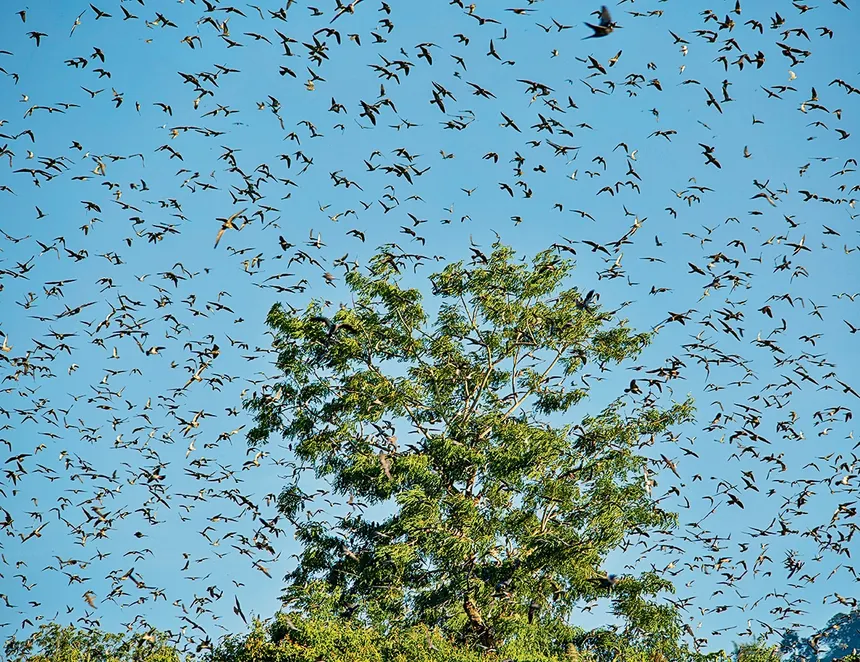
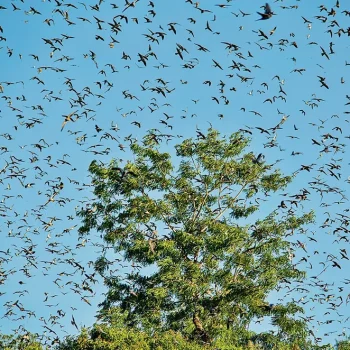
Every autumn, one of the greatest wildlife spectacles on earth unfolds over the hills of Northeast India. Hundreds of thousands — in peak years perhaps a million — Amur falcons descend on Nagaland, Assam and Manipur to rest and feed before crossing the Arabian Sea to Africa. At dusk the sky fills with swirling, chattering clouds of small raptors settling into the trees. For birdwatchers and wildlife photographers, the Amur falcon season is a bucket-list event. This guide covers when to go, the best roosting sites, how to watch ethically and how to plan the trip.
Meet the Amur falcon
| Scientific name | Falco amurensis |
| Size | About 28–31 cm long; roughly the size of a pigeon, weighing around 120–180 g |
| Breeds in | South-eastern Siberia, northern China and Mongolia (the Amur river basin gives it its name) |
| Winters in | Southern and eastern Africa — South Africa, Botswana, Zimbabwe and neighbours |
| Migration | Around 20,000–22,000 km a year — one of the longest of any raptor |
| Diet in India | Mainly flying termites and other insects |
| Status | IUCN Least Concern; listed under CMS Appendix II |
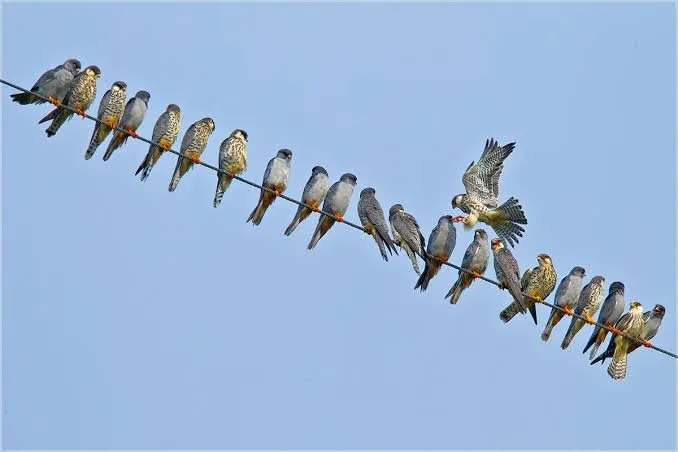
Males are slate grey with bright orange-red legs, eye-ring and cere and white underwing coverts that flash in flight; females are paler, barred and spotted. Watching both sexes at close range is part of the joy.
An extraordinary journey
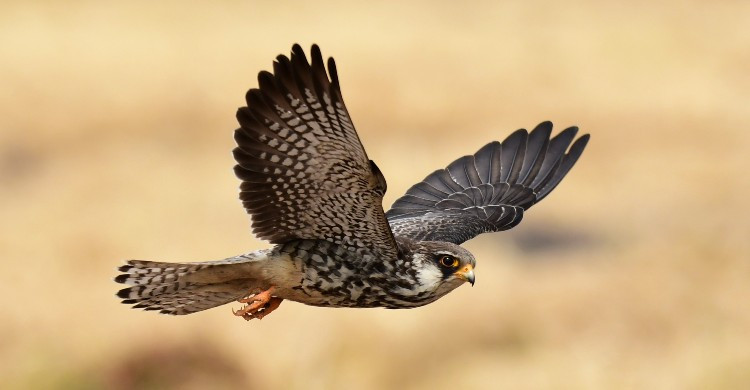
Satellite tracking by the Wildlife Institute of India has revealed just how remarkable this migration is. In 2018 a female tagged in Manipur’s Tamenglong district flew non-stop for five days and eight hours, covering about 5,700 km to Somalia — much of it over open ocean. In October 2026, two falcons tagged at Chiuluan in Tamenglong in November 2025, named Apapang and Alang, returned to Manipur after a year-long round trip through 23 countries. The falcons fuel this crossing on the termite swarms of Northeast India, nearly doubling their body weight before departure.
From hunting ground to conservation success
In 2012, mass trapping of roosting falcons around Nagaland’s Doyang reservoir drew global outrage. Within a season, the villages of Pangti and neighbouring Wokha communities, working with the Nagaland Forest Department and conservation groups, turned from hunters into protectors. Hunting fell to near zero from 2013, and Pangti now calls itself the “Falcon Capital of the World”. Similar community efforts protect roosts in Umrangso (Assam) and Tamenglong (Manipur). When you visit, your guide fees and homestay stays directly support that protection.
Best places to see Amur falcons
| Site | State | Season | Highlights | Permits |
|---|---|---|---|---|
| Pangti & Doyang reservoir, Wokha | Nagaland | First arrivals around 7 October; peak late October to first half of November | The largest known congregation; village-run viewing points and volunteer guides | Nagaland ILP for Indians; PAP for foreign nationals |
| Umrangso (Tumbung), Dima Hasao | Assam | Late October / early November to around early December | Roosts around the Kopili reservoir; observation point; Falcon Festival in December | None |
| Tamenglong (Chiuluan, Guangram) | Manipur | Mid-October to November | Satellite-tagging site; Amur Falcon Festival in November | Manipur ILP; PAP for foreigners — check current advisories |
Pangti, Nagaland — the “Falcon Capital”
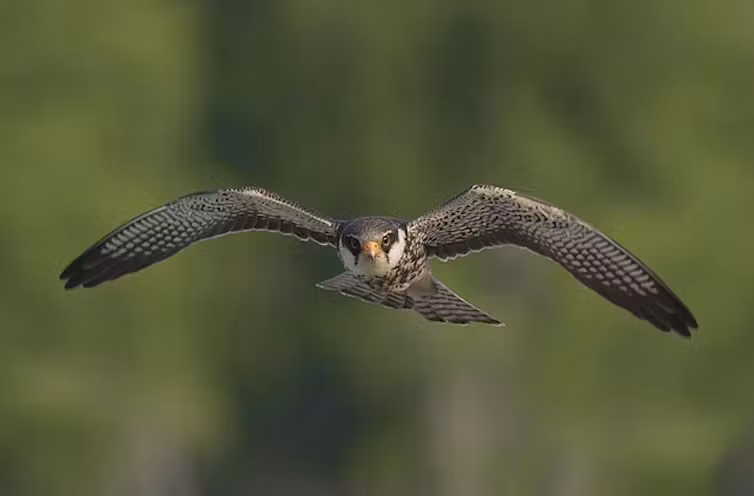
The first flocks usually reach Pangti in the second week of October, and numbers build daily — in one recent season from about 500 birds on 8 October to an estimated 50,000–60,000 by the third week. The village union (AFRAU) deploys volunteers who can guide visitors to the main roost, and in some seasons asks visitors to wait until after 20 October, when viewing is better and the birds are settled. The district declares a temporary silence zone around the village during roosting. Base yourself in Pangti homestays, Wokha town or a lodge near Doyang. Read our Nagaland travel guide.
Umrangso, Assam — the easy-access option
Because Assam needs no permits, Umrangso is the simplest site for international travellers. The falcons usually arrive at the end of October or early November and stay for around six weeks, giving the longest window of the three sites. See our full Umrangso travel guide.
Tamenglong, Manipur
An important research and roosting site with a strong community conservation story. Check the current security situation and your government’s travel advice before planning a visit to Manipur.
When to go: a simple calendar
- Early–mid October: scouts and first flocks arrive in Nagaland.
- Late October – mid November: peak numbers at Doyang and Tamenglong; the best overall window.
- November – early December: Umrangso remains active; Nagaland numbers fall as birds depart for Africa.
Arrival dates shift slightly with weather, so keep two flexible days in your plan.
How to watch: a birder’s playbook
- Be at the roost 60–90 minutes before sunset. The great swirling arrivals happen as light fades.
- Return before dawn. Watch the falcons lift off the trees and disperse to feed — often the best light for photographs.
- Bring 8×42 or 10×42 binoculars and, for photography, a 400–600 mm lens; a monopod helps on uneven ground.
- Look for associated species. Termite swarms also attract other raptors, drongos and swifts; scan the flocks carefully.
- Log your sightings on eBird to support research on the migration.
Ethics at the roost
- Stay behind volunteers’ markers; never walk under roosting trees.
- No flash, no playback, no drones, no loud music or firecrackers.
- Keep groups small and voices low, especially at dusk.
- Pay community fees and hire village guides — it is the economic engine of conservation here.
Sample itineraries
| Trip | Days | Route |
|---|---|---|
| Falcon Capital | 4 | Dimapur – Wokha/Pangti (2 nights, dusk and dawn roosts) – Kohima – Dimapur |
| Falcons & Hornbill | 7 | Pangti in late October or early November, then Kohima for the Hornbill Festival from 1 December — or combine Umrangso’s late roosts with Hornbill |
| Assam Birding Circuit | 7 | Guwahati – Umrangso (2) – Kaziranga (2) – Guwahati |
See our Northeast India itineraries for routes to combine.
Permits and practicalities
- Indian citizens need a Nagaland or Manipur Inner Line Permit; foreign nationals need a Protected Area Permit for both states since December 2024. Assam needs neither. Details in our permits guide.
- Roads to roost sites can be rough; an SUV with a local driver is recommended.
- Evenings are cool in November — carry a warm layer, a headlamp and insect repellent.
- Accommodation near the roosts is simple and limited; book early in peak weeks.
Private Amur falcon birding journeys. We arrange permits, experienced local guides, comfortable stays and roost visits timed to dusk and dawn — in Nagaland, Assam or both. Plan your falcon trip or see our Nagaland tour.
Frequently asked questions
When is the Amur falcon season in Northeast India?
From early October to early December. Peak numbers are usually seen from late October to mid-November.
Where is the best place to see Amur falcons in India?
Pangti village and the Doyang reservoir in Wokha district, Nagaland, host the largest known congregation. Umrangso in Assam is the easiest site to access.
What time of day is best for watching Amur falcons?
Dusk, when the flocks gather to roost, and dawn, when they lift off to feed.
Why do Amur falcons stop in Northeast India?
To feed on abundant flying termites and build fat reserves before their non-stop flight across the Arabian Sea to Africa.
Can foreigners visit Pangti?
Yes, with a Protected Area Permit for Nagaland arranged in advance through a registered tour operator.
Latest Posts






Woahhh! Hello there! Stop! You don't wanna do this.
Get
Quotes


