August 20th, 2026
Nagaland Travel Guide: Hornbill Festival, Headhunter Tribes & Everything You Need to Know Before You Go
Tucked away in the far northeastern corner of India, where mist-covered hills roll into Myanmar, lies a land that feels like a different country altogether — Nagaland. This is a state of sixteen major tribes, each with its own language, cuisine, and folklore, bound together by a shared warrior history and, for ten days every December, one extraordinary celebration: the Hornbill Festival.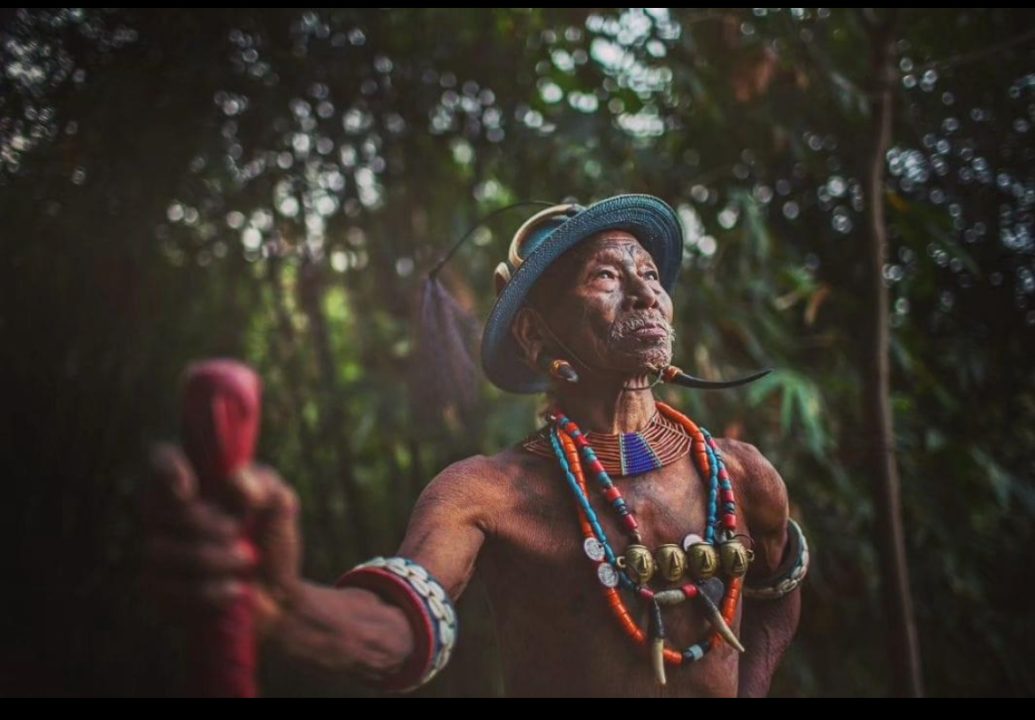
If you’ve ever seen a photograph of a Naga elder with a tattooed face and a necklace of brass human-head pendants and wondered about the story behind it, this guide is for you. We’re covering everything — the Hornbill Festival, the fascinating (and often misunderstood) headhunter tribes of Nagaland, the best time to visit, how to get there, what to budget, and a ready-to-use day-wise itinerary. And at the end, we’ll show you how The Unexplored turns all of this into a seamless, unforgettable trip.
Why Nagaland Should Be on Your Travel List
Nagaland isn’t a “check the box and move on” destination — it rewards travellers who want depth over ticks on a list. Where else can you sit inside a centuries-old wooden morung (bachelor’s dormitory), taste smoked pork with axone (fermented soybean), watch war dances performed in full warrior regalia, and stand in a village that literally straddles an international border, all within one trip?
For photographers, culture enthusiasts, and slow travellers, Nagaland delivers experiences you simply cannot manufacture anywhere else in India.
The Hornbill Festival: India’s “Festival of Festivals”
What Is the Hornbill Festival?
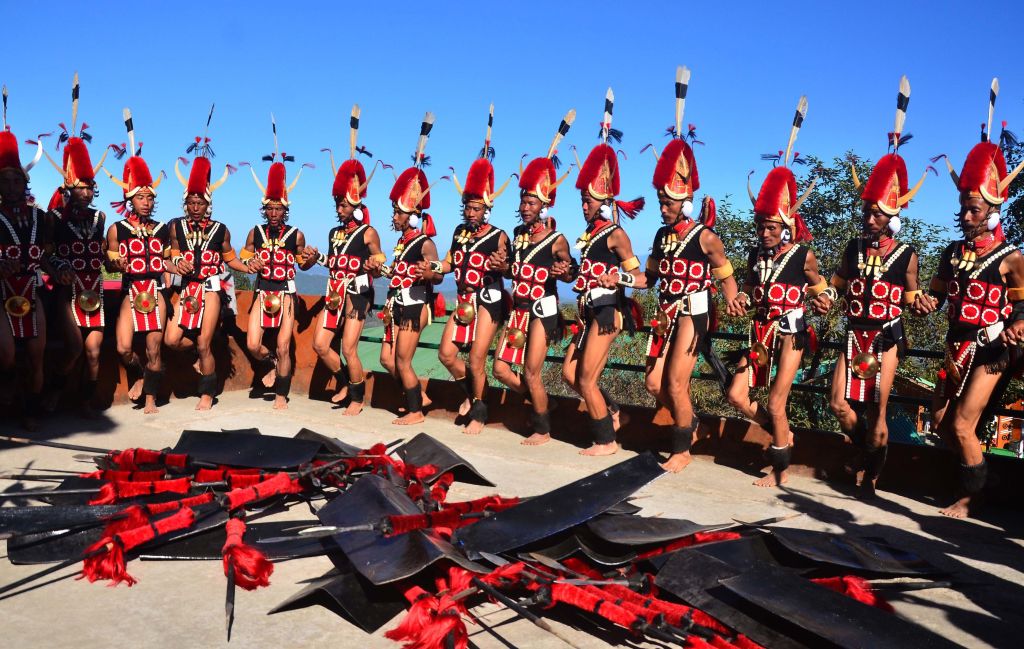
Launched by the Nagaland government in December 2000, the Hornbill Festival was created to bring the state’s many tribes together under one roof and to protect and showcase Naga heritage before it faded from living memory. It’s named after the hornbill bird, which holds deep symbolic and cultural significance across Naga folklore and traditional headgear.
Held every year at Kisama Heritage Village, about 12 km from Kohima, the festival has grown into one of Asia’s most spectacular cultural gatherings — often called the “Festival of Festivals.”
When Is It Held?
The Hornbill Festival runs from December 1 to December 10 every year, without fail. This makes it one of the few major Indian festivals with a fixed, predictable date range — perfect for planning well in advance.
What Happens at the Festival?
- Morung exhibitions — Each Naga tribe builds a traditional morung (community hut) at Kisama, displaying its unique architecture, artefacts, and way of life.
- Cultural performances — War dances, folk songs, and traditional ceremonies performed by tribal groups including the Konyak, Angami, Ao, Chang, Rengma, Sumi and more.
- Naga King Chilli eating contest — A fiery, crowd-favourite competition featuring one of the world’s hottest chillies.
- Traditional sports — Naga wrestling, archery, indigenous games, and a log-pulling contest.
- Hornbill International Rock Contest — Held at the Indira Gandhi Stadium in Kohima, this has become a major draw for India’s indie and metal music scene, with international bands also participating.
- Crafts, food stalls and flower shows — Wood carving, weaving, herbal medicine stalls, and Naga cuisine pop-ups line the festival grounds.
- Night carnival & Miss Nagaland pageant — Kohima’s streets come alive after dark with music, food, and light shows.
Simply put, ten days at Kisama gives you a crash course in Naga culture that would otherwise take months of travel across remote villages to experience.
The Headhunter Tribes of Nagaland: Fact, Not Folklore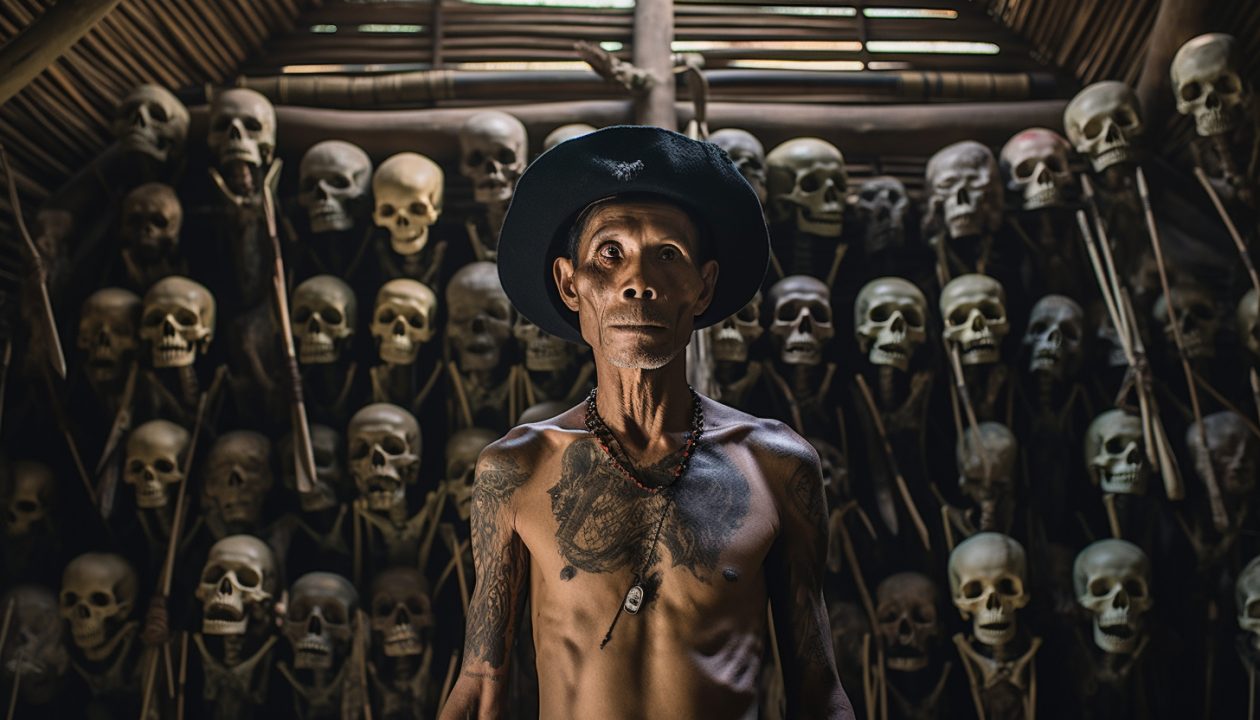
No conversation about Nagaland is complete without addressing its most talked-about (and most misunderstood) chapter of history: headhunting.
Who Were the Headhunters?
Several Naga tribes — most famously the Konyak, the largest tribe in Nagaland — practised headhunting as part of a warrior culture rooted in territorial defence, honour, and status. Conflicts between villages often arose over land, water sources, or disputes between clans, and taking an enemy’s head in battle was considered the ultimate mark of a warrior’s courage.
Young Konyak men trained for this role from boyhood in the morung, the community hall that doubled as a warrior training ground and social hub.
The Meaning Behind the Facial Tattoos
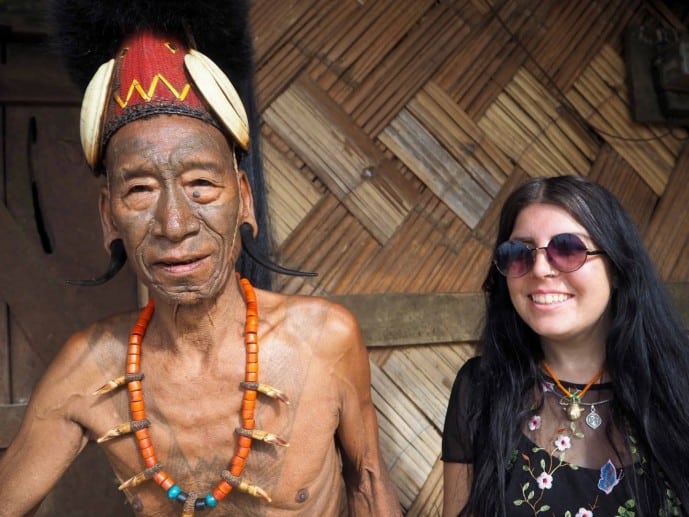
The striking facial and chest tattoos worn by Konyak elders aren’t decorative — they’re a record. Traditionally, only the wife of the village chief (the Anghya) had the authority to tattoo a warrior, using a handmade comb and thorns dipped in ink made from tree resin and soot.
- A warrior received his first facial tattoo after his first successful headhunt.
- Additional marks were added after subsequent raids.
- Warriors who fought bravely but returned without a head were sometimes marked on the chest instead.
- Women received simpler tattoos on their arms and legs to mark life milestones such as marriage.
When Did Headhunting End?
Headhunting was gradually phased out through the mid-20th century as Christian missionary influence spread through the Naga Hills and the government intervened to end inter-village raids, with the last recorded incidents fading out by the late 1960s. Today, the practice is entirely a thing of the past — but the generation of tattooed elders who lived through its final years is still alive, making this quite possibly the last decade to meet them in person.
Where to Meet the Konyak Tribe Today
The heart of Konyak territory is Mon district in northeastern Nagaland, close to the Myanmar border. The most famous village to visit is Longwa, which is unique for a simple reason: the India-Myanmar international border runs directly through the Angh (chief’s) house — meaning you can literally have breakfast in India and lunch in Myanmar without a passport check.
Meeting the last of the tattooed headhunters, hearing their stories firsthand, and seeing the morungs of Mon district is, for many travellers, the single most memorable part of a Nagaland trip.
Best Time to Visit Nagaland
| Season | Months | Why Visit / Avoid |
|---|---|---|
| Peak season (highly recommended) | November – December | Hornbill Festival, pleasant 10–20°C weather, clear skies, best road conditions |
| Good season | October, January – March | Cool, dry weather, good visibility, fewer crowds than festival time |
| Avoid | April – May | Pre-monsoon heat and humidity start building up |
| Avoid | June – September | Monsoon season; heavy rain, landslide risk on hill roads, poor visibility |
Our recommendation: If the Hornbill Festival and the Konyak tribes are your priority (and they should be), plan your trip for the first two weeks of December. Book accommodation and transport at least 2–3 months in advance — Kohima’s hotels fill up fast during festival season.
How to Reach Nagaland
By Air
Dimapur Airport is Nagaland’s only airport, with direct flights from Kolkata and easy one-stop connections from Delhi, Mumbai, Bengaluru, and Guwahati. From Dimapur, it’s roughly a 3-hour drive to Kohima.
By Rail
Dimapur Railway Station, on the North East Frontier Railway network, is the nearest major station, with direct and connecting trains from Guwahati and onward links to major Indian cities.
By Road
- From Guwahati: Approximately 8–9 hours by road via NH27, through scenic forested hills. Overnight buses also run between Guwahati/Shillong and Dimapur/Kohima.
- Local transport: Shared and private taxis operate from Dimapur’s taxi stand near the railway station; an exclusive taxi to Kohima costs roughly ₹1,500–2,000 one-way.
- Getting to Mon/Longwa: This requires an additional 8–9 hour drive from Kohima through Mokokchung, so factor in extra travel days or, better, let a local operator handle the logistics.
Tip: Since Nagaland shares a sensitive international border, Indian nationals should carry a valid photo ID at all times, and foreign nationals should check current Protected Area Permit (PAP) requirements before travel — regulations can change, so verify with your tour operator or the Nagaland Tourism office closer to your travel date.
What to Expect in Nagaland
- Warm, welcoming people — Naga hospitality is legendary; homestays and village visits are often the highlight of a trip.
- Bold, distinctive food — Smoked pork, bamboo shoot dishes, axone (fermented soybean), and the fiery Naga king chilli. Vegetarian options exist but are limited outside major towns, so flexible eaters will enjoy this trip far more.
- Cool hill climate — Pack layers; evenings in Kohima and Mon can get quite cold, especially in December.
- Limited connectivity — Mobile networks (especially in remote districts like Mon) can be patchy. Only certain Indian telecom operators (notably BSNL and Airtel in some circles) work reliably; download offline maps in advance.
- Cash-first economy — ATMs are scarce outside Kohima and Dimapur; carry sufficient cash for remote areas.
- Rugged terrain — Roads to villages like Longwa are winding and can be bumpy; this is an adventure destination, not a luxury-highway one.
- Photography etiquette — Always ask permission before photographing tribal elders, especially those with tattoos; a respectful approach (and often a small gesture of thanks) goes a long way.
Average Budget Plan for a Nagaland Trip
Costs vary based on travel style, but here’s a realistic breakdown for a 6-day, 5-night trip covering Kohima, the Hornbill Festival, and Mon district (per person, twin-sharing, excluding flights to Dimapur):
| Category | Budget Traveller | Mid-Range | Premium/Curated |
|---|---|---|---|
| Accommodation | ₹800–1,500/night | ₹2,000–3,500/night | ₹4,000–7,000/night |
| Local transport (SUV/shared) | ₹1,500–2,500/day | ₹3,000–4,500/day | ₹5,000–7,000/day |
| Meals | ₹500–800/day | ₹1,000–1,500/day | ₹1,500–2,500/day |
| Hornbill Festival entry & activities | ₹300–500/day | ₹300–500/day | Included in packages |
| Guide/permits/miscellaneous | ₹500–1,000/day | ₹800–1,500/day | Included in packages |
| Approx. total (5 days, excl. flights) | ₹18,000–22,000 | ₹28,000–38,000 | ₹45,000–65,000+ |
Add roughly ₹8,000–18,000 for round-trip flights to Dimapur, depending on your city of origin and how early you book. Since much of Nagaland’s charm lies in remote villages with limited public transport, a private vehicle or an organised tour significantly improves both comfort and the depth of experience — this is one destination where DIY travel often costs more time and hassle than it saves in money.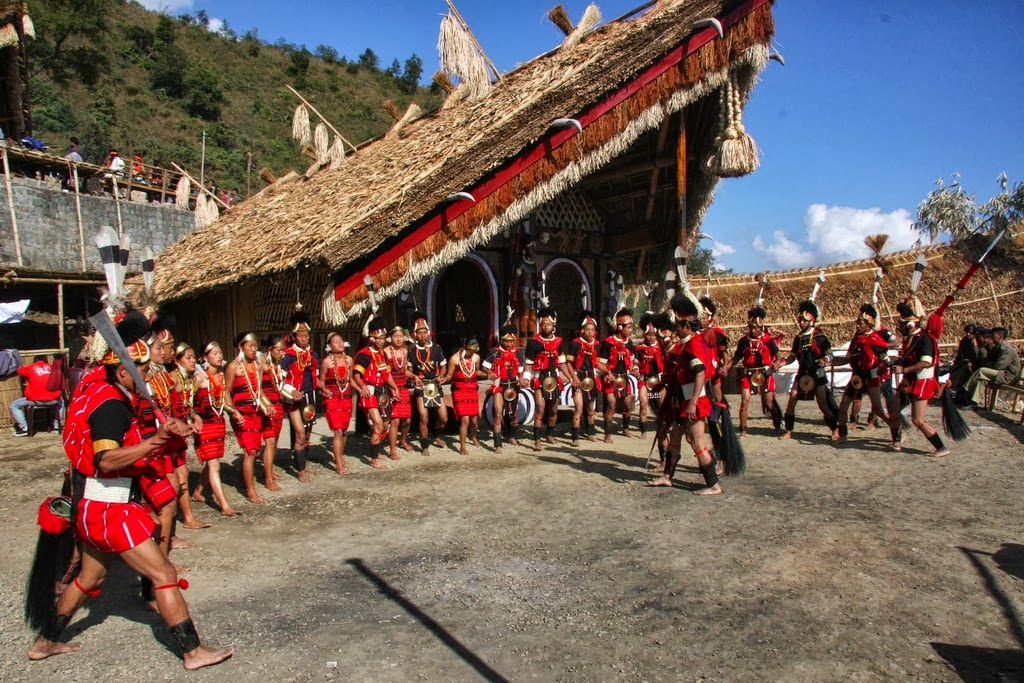
Day-Wise Nagaland Itinerary (6 Days / 5 Nights)
Day 1: Arrival in Dimapur → Kohima
Land in Dimapur, drive roughly 3 hours to Kohima. Settle into your hotel, visit the Kohima War Cemetery (a moving WWII memorial), and explore the local market for your first taste of Naga cuisine.
Day 2: Kohima Sightseeing + Kisama Hornbill Festival
Morning visit to Kohima’s viewpoints and the State Museum, followed by a full afternoon and evening at the Hornbill Festival grounds in Kisama — explore the morungs, watch cultural performances, and sample festival food.
Day 3: Full Day at Hornbill Festival
Dedicate the entire day to Kisama: catch the Naga King Chilli eating contest, traditional sports, craft stalls, and, if your dates align, the Hornbill International Rock Contest in the evening.
Day 4: Kohima → Mon District (Konyak Territory)
An early start for the long but scenic 8–9 hour drive to Mon district via Mokokchung, arriving by evening. This is the gateway to Konyak headhunter territory.
Day 5: Longwa Village — Meet the Konyak Tribe
Visit Longwa village, straddling the India-Myanmar border. Meet tattooed Konyak elders, visit the Angh’s (chief’s) house, explore a traditional morung, and learn about headhunting history directly from community members.
Day 6: Mon/Longwa → Dimapur → Departure
Begin the return journey to Dimapur (roughly 10–11 hours, so plan for an early departure or an overnight halt in Kohima on the way back) in time for your onward flight home.
(Prefer a more relaxed pace? This itinerary can easily be extended to 8–9 days to include Dzükou Valley trekking, Khonoma green village, or Touphema cultural village — just ask us.)
How The Unexplored Can Help You Experience Nagaland the Right Way
Nagaland isn’t a destination you want to figure out on the fly. Long inter-district drives, patchy connectivity, cultural nuances around visiting tribal communities respectfully, and a festival season that books up fast — these are exactly the challenges The Unexplored exists to solve.
As a travel company built specifically around India’s Seven Sister states and Sikkim, we don’t just sell a package — we build your journey around what genuinely matters to you, whether that’s photographing the Hornbill Festival’s opening ceremony, sitting down with a Konyak elder in Longwa, or trekking through Dzükou Valley’s rolling meadows.
Here’s what travelling with us looks like:
- End-to-end planning — flights coordination, accommodation, private transport, permits, and English/Hindi-speaking local guides, all arranged for you.
- Deep local access — genuine connections in Naga villages that get you beyond the “tourist stop” and into real conversations and homestays.
- Custom itineraries — whether you want a fast-paced 6-day festival trip or a slower 10-day cultural immersion, we tailor the plan around you.
- On-ground support throughout — from the moment you land in Dimapur to your departure, our team handles the logistics so you can focus on the experience.
As one of our travellers put it, working with our team is “the closest you can get to the ‘click and forget’ button” in a region that genuinely requires expert planning.
Ready to see the Hornbill Festival and meet Nagaland’s last tattooed headhunters in person? Get in touch with The Unexplored to start planning your custom Nagaland itinerary today.
Frequently Asked Questions
Is Nagaland safe for tourists? Yes. Nagaland is one of the safer states for travellers in Northeast India, with a strong culture of hospitality. As with any trip, book with a reliable operator and stay updated on current travel advisories, especially for border-area districts like Mon.
Do I need a permit to visit Nagaland? Indian citizens do not currently need an Inner Line Permit for Nagaland, but should carry valid photo ID at all times. Foreign nationals may require a Protected Area Permit (PAP) for certain areas — check current requirements before travel.
How many days do I need for Nagaland? A minimum of 5–6 days lets you cover Kohima, the Hornbill Festival, and Mon district comfortably. 8–10 days allows for a more relaxed pace with added treks and villages.
Can I still meet real headhunters in Nagaland? Yes, a small number of elderly Konyak tribesmen who took part in headhunting before the practice ended in the late 1960s are still alive, primarily in Mon district villages like Longwa and Shangnyu. Visiting respectfully, with a knowledgeable local guide, is the best way to meet them.
Sources referenced for accuracy: Nagaland Tourism (tourism.nagaland.gov.in), Wikipedia (Hornbill Festival), and travel research on Konyak tribe history.
Latest Posts


Woahhh! Hello there! Stop! You don't wanna do this.
Get
Quotes


